
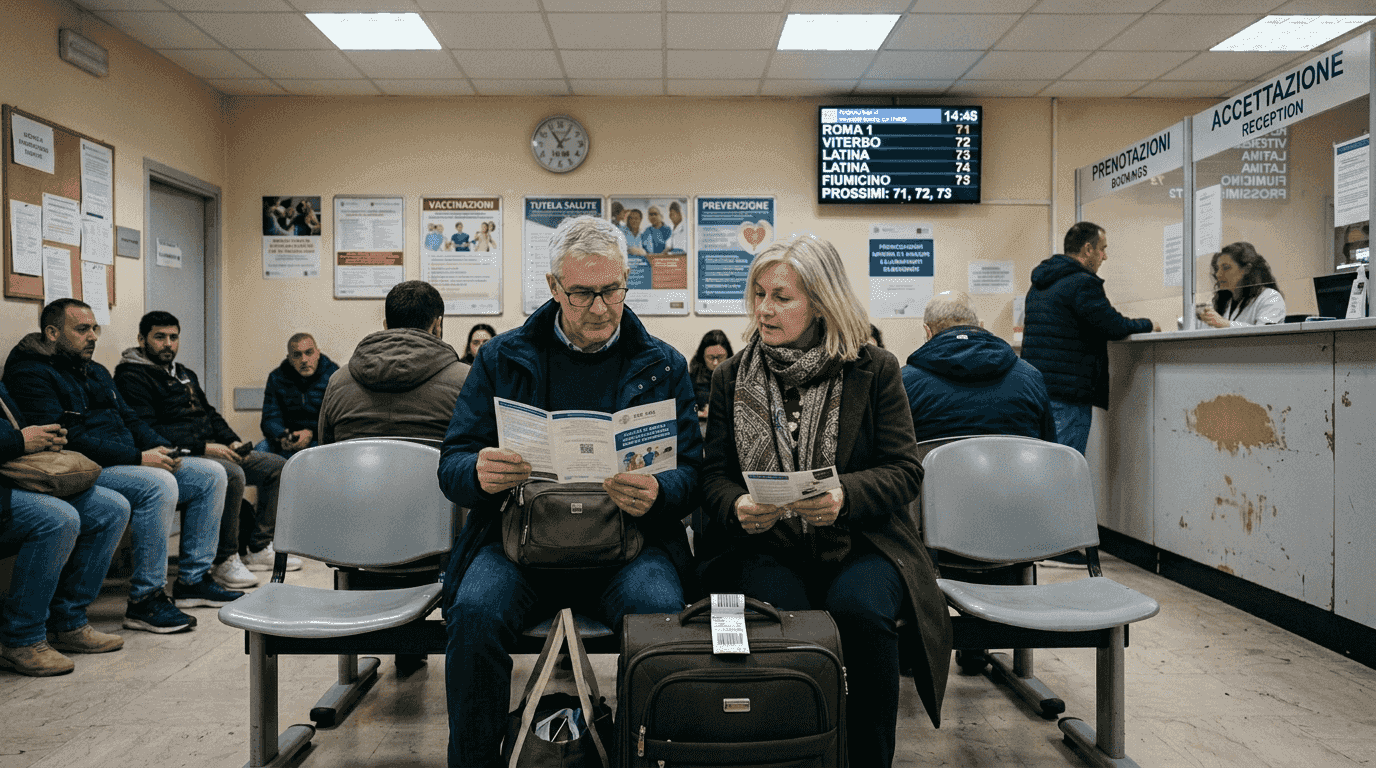
Moving to Italy as an expat or digital nomad brings excitement, but navigating the healthcare system often triggers confusion and anxiety. Many newcomers mistakenly believe they automatically qualify for free healthcare upon arrival, only to discover complex residency requirements and registration processes. Others struggle with limited doctor availability, language barriers, and regional variations in costs and services. Understanding your healthcare rights, eligibility pathways, and practical navigation strategies transforms this overwhelming challenge into manageable steps, ensuring you access quality care when you need it most.
Table of Contents
- Understanding The Italian Healthcare System: Structure And Principles
- Eligibility And Registration: Securing Your Healthcare Access As An Expat
- Costs, Co-Pays, And Exceptions: Managing Healthcare Expenses In Italy
- Practical Healthcare Guidance For Expats: Navigating Doctors, Appointments, And System Nuances
- Get Personalized Healthcare Support With MyDearDoc
- Frequently Asked Questions
Key takeaways
| Point | Details |
|---|---|
| Universal coverage depends on status | Italian healthcare offers broad access, but eligibility hinges on your residency type and visa category. |
| SSN registration unlocks services | Enrolling with the National Health Service is mandatory for some expats and voluntary for others, with distinct requirements. |
| Regional cost variations exist | Co-pays and exemptions differ across regions, while dental and optical care remain largely private. |
| Doctor availability requires strategy | GPs work limited hours and balance public-private patients, making appointment planning essential. |
| Language support improves outcomes | Translation services and English-speaking providers help expats communicate medical needs effectively. |
Understanding the Italian healthcare system: structure and principles
Italy's National Health Service, known as the Servizio Sanitario Nazionale or SSN, operates as a universalistic system funded through general taxation, guaranteeing residents comprehensive healthcare access. Established by Law 833/1978, this framework ensures that healthcare is a fundamental right rather than a privilege tied to employment or income level. The system's architecture rests on three organizational pillars: territorial care covering primary services and prevention, specialist and diagnostic services providing advanced testing and consultations, and hospital care delivering inpatient treatment and emergency services.
Funding flows primarily through national and regional taxes, supplemented by social security contributions from workers. Italy's healthcare operates through decentralization, with the national government setting essential benefit levels while regional authorities manage day-to-day operations and budgets. This structure creates notable variations in service quality, wait times, and co-pay amounts across Italy's 20 regions. Northern regions like Lombardy and Emilia-Romagna typically offer faster service and more resources compared to southern areas.
The Italian Constitution enshrines three core principles guiding the SSN: universality ensures coverage for all residents regardless of income, equality guarantees uniform access to essential services nationwide, and solidarity spreads costs across the population through progressive taxation. These values shape how the system delivers care, prioritizing preventive medicine and primary care over expensive specialist interventions.
For expats navigating this landscape, understanding these structural elements clarifies why your legal residency status directly impacts healthcare access. The SSN wasn't designed with short-term visitors or non-residents in mind, creating specific pathways and requirements for foreigners seeking care. Most primary care visits, diagnostic tests, and hospital treatments cost little or nothing for registered residents, though co-pays apply to certain services. Dental and optical care fall mostly outside public coverage, requiring private payment or insurance.
Eligibility and registration: securing your healthcare access as an expat
Expats arriving in Italy fall into distinct categories that determine their healthcare eligibility and registration requirements. Three main groups face different access routes: EU citizens exercising freedom of movement, non-EU nationals holding work permits or student visas, and elective residence visa holders seeking retirement or extended stays. Each category carries specific documentation needs and enrollment processes that can feel bureaucratic and confusing without proper guidance.
Mandatory SSN registration applies to employed residents and non-EU nationals with work permits who contribute to social security. These individuals must register at their local Azienda Sanitaria Locale office, bringing their residence permit, tax identification number, employment contract, and proof of address. The process typically takes two to four weeks, after which you receive a health card enabling access to general practitioners, specialists, and hospital services. EU citizens working in Italy follow similar mandatory registration, though they can use their European Health Insurance Card for temporary coverage during the enrollment period.
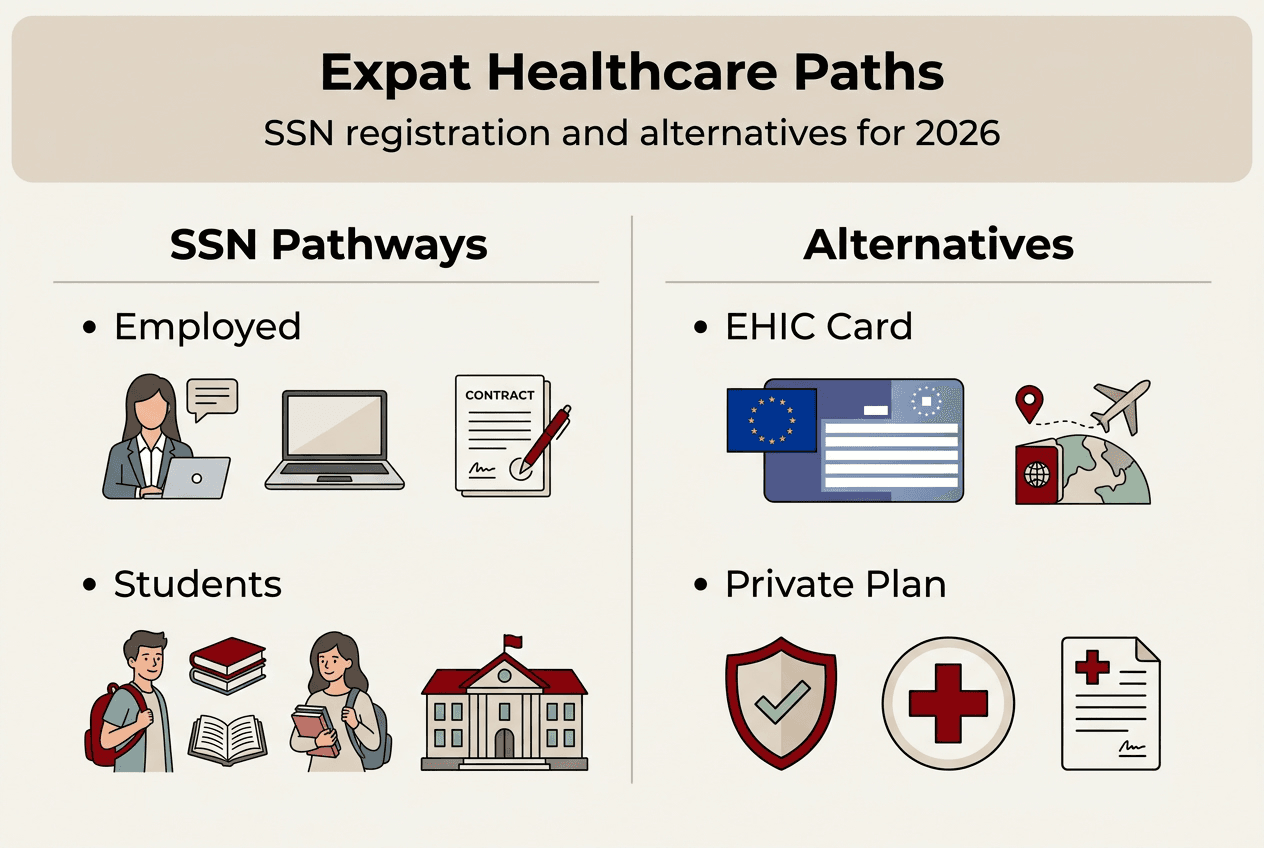
EU citizens visiting or staying temporarily without formal employment can rely on their EHIC for emergency and necessary medical care, but this card doesn't provide comprehensive primary care access or cover pre-existing conditions fully. Longer stays exceeding three months require proper SSN registration to access the full range of services. Digital nomads from EU countries often face gray areas here, as their work status doesn't fit traditional employment categories, yet they need reliable healthcare during extended Italian stays.
Voluntary SSN registration offers an alternative pathway, typically costing a minimum of €2,000 annually, though fees vary by region and can reach €3,500 or more. This option suits elective residence visa holders, retirees, and some self-employed individuals who don't qualify for mandatory enrollment. Students and au pairs often receive reduced rates or special arrangements. The voluntary route grants the same healthcare rights as mandatory enrollment, including GP selection, specialist referrals, and hospital care, making it worthwhile for expats planning multi-year stays.
| Visa Type | Registration Status | Typical Annual Cost | Coverage Level |
|---|---|---|---|
| EU employed | Mandatory | Included in taxes | Full SSN access |
| Non-EU work permit | Mandatory | Included in contributions | Full SSN access |
| Elective residence | Voluntary | €2,000 to €3,500 | Full SSN access |
| EU temporary visitor | EHIC only | No fee | Emergency and necessary care |
| Student visa | Voluntary reduced | €150 to €500 | Full SSN access |
Pro Tip: Start your SSN registration process immediately after receiving your residence permit to avoid gaps in coverage and potential emergency costs.
Navigating these pathways requires understanding your specific visa conditions and residency timeline. Many expats delay registration, assuming private insurance suffices, only to discover that accessing quality care becomes complicated without SSN enrollment. Early registration eliminates barriers, reduces long-term costs, and provides peace of mind during your Italian adventure.
Costs, co-pays, and exceptions: managing healthcare expenses in Italy
Italy's healthcare system introduces the concept of the "ticket," a co-pay charged for certain medical services even when you're registered with the SSN. Co-pay amounts for specialist visits vary regionally, with some areas charging €25 for consultations while others demand €50 or more. Diagnostic tests carry separate tickets, ranging from €15 for basic blood work to €100 for advanced imaging like MRIs. These fees fund regional health budgets and help manage demand for non-urgent services.

Exemptions significantly reduce or eliminate co-pays for vulnerable populations. Low-income residents earning below specific thresholds receive exemption codes waiving most tickets. Pregnant women access maternity care without co-pays from confirmation through postpartum checkups. Patients with chronic conditions like diabetes, cardiovascular disease, or cancer obtain disease-specific exemption codes covering related treatments and monitoring. Children under six and seniors over 65 with low incomes also qualify for reduced or eliminated co-pays in many regions.
Public SSN coverage handles most primary care, specialist consultations, hospital stays, and emergency services with minimal or no cost beyond tickets. However, dental and optical care remain mostly private, with public coverage limited to minors and urgent cases. Routine dental cleanings, fillings, and eyeglasses require out-of-pocket payment or supplemental private insurance. Many expats maintain private dental plans or budget €100 to €300 annually for preventive dental care.
Regional variations create surprising cost differences across Italy. Northern regions often charge higher tickets but deliver faster service and better facilities. Southern regions may have lower co-pays but longer wait times for non-urgent procedures. Understanding your specific region's fee structure and exemption policies prevents billing surprises and helps you budget healthcare expenses accurately.
| Service Type | Typical Ticket Range | Common Exemptions | Private Alternative Cost |
|---|---|---|---|
| GP visit | €0 (covered) | Universal for registered | €50 to €100 |
| Specialist visit | €25 to €50 | Low income, chronic disease | €80 to €150 |
| Blood tests | €15 to €30 | Pregnancy, chronic conditions | €40 to €80 |
| MRI scan | €50 to €100 | Cancer, specific diagnoses | €200 to €400 |
| Dental cleaning | Not covered | Minors, emergencies only | €60 to €120 |
| Prescription drugs | €0 to €10 per item | Low income, chronic disease | Full retail price |
Pro Tip: Visit your local ASL office to verify your exemption eligibility and obtain necessary codes before scheduling appointments to avoid unexpected co-pay charges.
Private healthcare supplements public services for expats seeking faster access, English-speaking providers, or services outside SSN coverage. Many choose hybrid approaches, using SSN for routine care while paying privately for dental work, mental health counseling, or specialist consultations with shorter wait times. Understanding these cost dynamics helps you make informed decisions about when to use public services versus private alternatives.
Practical healthcare guidance for expats: navigating doctors, appointments, and system nuances
Selecting and accessing a general practitioner represents your gateway to Italian healthcare, yet GPs often work limited hours, typically offering appointments only during weekday mornings or specific afternoon slots. Many doctors split their time between public SSN patients and private practice, reducing availability for routine appointments. This dual role means your GP might see private patients in the afternoon while SSN appointments cluster into narrow morning windows, creating scheduling challenges for working expats.
Switching doctors is not only permitted but encouraged when you're dissatisfied with care quality, availability, or communication. The ASL maintains lists of accepting GPs in your area, and you can change your assigned doctor online or in person with minimal paperwork. Many expats switch multiple times before finding a provider whose schedule, approach, and language skills match their needs. Don't hesitate to advocate for yourself by researching doctor reviews, asking other expats for recommendations, and making changes when necessary.
Managing appointments requires proactive strategies. Book routine checkups and non-urgent consultations weeks in advance, as same-day or next-day appointments rarely exist for non-emergencies. Arrive early to appointments, as Italian medical offices often run behind schedule. Bring your health card, tax code, and any previous test results or medical records to every visit. If your GP can't accommodate urgent concerns, walk-in clinics called "guardia medica" provide after-hours care for issues that can't wait for regular appointments.
Steps for effective healthcare navigation:
- Register with the SSN immediately after establishing residency to avoid coverage gaps
- Request your GP list from ASL and research doctors accepting new patients in your area
- Schedule initial appointments early to establish relationships before urgent needs arise
- Maintain organized records of prescriptions, test results, and specialist referrals
- Learn basic medical Italian terms or use translation apps during consultations
- Verify co-pay requirements and exemption status before scheduling procedures
- Consider private consultations or online services when public wait times exceed your needs
Language barriers complicate medical communication for many expats, especially when describing symptoms, understanding diagnoses, or following treatment instructions. Some GPs speak English, but many don't, creating potential misunderstandings about prescriptions or follow-up care. Translation services and assistance programs bridge these gaps, offering interpretation during appointments or helping you understand medical documents and instructions accurately.
Pro Tip: Don't accept mistakes or unclear communication without questioning. Verify prescription dosages, ask for written instructions, and request clarification if diagnoses or treatment plans seem confusing.
Advocating for yourself within Italy's healthcare system requires persistence and attention to detail. Check medication names and dosages before leaving the pharmacy, as errors occasionally occur. Question test results that seem inconsistent with your symptoms. Request second opinions when diagnoses feel uncertain. The system respects patients who engage actively in their care, asking informed questions and ensuring they understand their treatment fully. Building this proactive approach protects your health and maximizes the quality of care you receive throughout your Italian stay.
Get personalized healthcare support with MyDearDoc
Navigating Italy's healthcare system becomes significantly easier when you have expert support tailored to expat needs. Understanding eligibility, managing appointments, and communicating medical concerns in a foreign system challenges even the most organized newcomers.
MyDearDoc specializes in bridging these gaps for foreigners, travelers, and digital nomads living in Italy. Our Health Horizon Plus follow-up consultations provide personalized medical advice from English-speaking doctors who understand expat healthcare challenges. Whether you need prescription renewals, test result interpretation, or guidance on specialist referrals, our virtual consultations eliminate language barriers and long wait times. The Health Compass service helps you navigate Italian healthcare options, clarifying your eligibility status, explaining regional variations, and identifying the most efficient pathways for your specific situation. When urgent medical concerns arise, our online medical assistance connects you with qualified healthcare professionals quickly, providing remote diagnoses, prescriptions, and medical certificates without the hassle of scheduling in-person appointments weeks in advance. These services complement your SSN coverage, offering the convenience and clarity that make healthcare in Italy manageable and stress-free.
Frequently asked questions
What documents do I need to register for the SSN as an expat?
Typically, you need a valid passport, residence permit showing legal stay authorization, codice fiscale tax identification number, and proof of residence like a rental contract or utility bill. Requirements vary slightly by region, so checking with your local ASL office before your appointment ensures you bring everything necessary. Some regions request additional documentation like employment contracts for mandatory enrollment or proof of sufficient income for voluntary registration.
Can digital nomads use the EHIC for healthcare in Italy?
EU citizens can use EHIC for emergency and necessary medical care during temporary visits without full SSN registration. However, the card provides limited coverage focused on urgent treatment rather than comprehensive primary care or management of pre-existing conditions. Digital nomads planning extended stays beyond three months should pursue proper SSN registration to access the full range of healthcare services, including routine checkups, specialist consultations, and ongoing treatment.
How can expats handle GP appointment wait times in Italy?
Book appointments as early as possible and remain flexible with scheduling to secure available slots. GPs balance public and private patients with limited hours, causing appointment challenges for routine care. If your current GP consistently lacks availability, switching to another doctor on the ASL list often improves access. For urgent concerns that can't wait weeks, consider private consultations or online medical services that provide faster appointments without sacrificing quality care.
Are prescription medications free in Italy with SSN registration?
Prescription drugs typically require small co-pays ranging from zero to €10 per medication, depending on the drug classification and your exemption status. Essential medications for chronic conditions often cost less or nothing for patients with disease-specific exemption codes. Over-the-counter medications and drugs not on the SSN formulary require full out-of-pocket payment. Always present your health card and any exemption documentation at pharmacies to ensure you receive applicable discounts and avoid paying more than necessary.
What healthcare options exist for expats without SSN registration?
Expats without SSN enrollment can purchase private health insurance covering medical services in Italy, though policies vary widely in coverage and cost. Emergency care is available to everyone regardless of registration status, with hospitals required to provide urgent treatment. Private clinics and doctors accept self-pay patients for consultations, diagnostics, and treatments at market rates. Online telemedicine platforms serving expats offer another alternative, providing medical consultations, prescriptions, and guidance without requiring SSN registration, making healthcare accessible during transition periods or for short-term stays.
Recommended
- Navigating Healthcare During Your Move to Italy: A Guide for Expats | mydeardoc.com
- How to Access the Italian Healthcare System as a Foreigner: A Guide | mydeardoc.com
- Italy Christmas Healthcare Guide for Tourists and Expats | mydeardoc.com
- 10 Essential Health Tips for Foreigners Moving to Italy | mydeardoc.com